
Hammer Museum celebrating UCLA Grunwald Center for the Graphic Arts

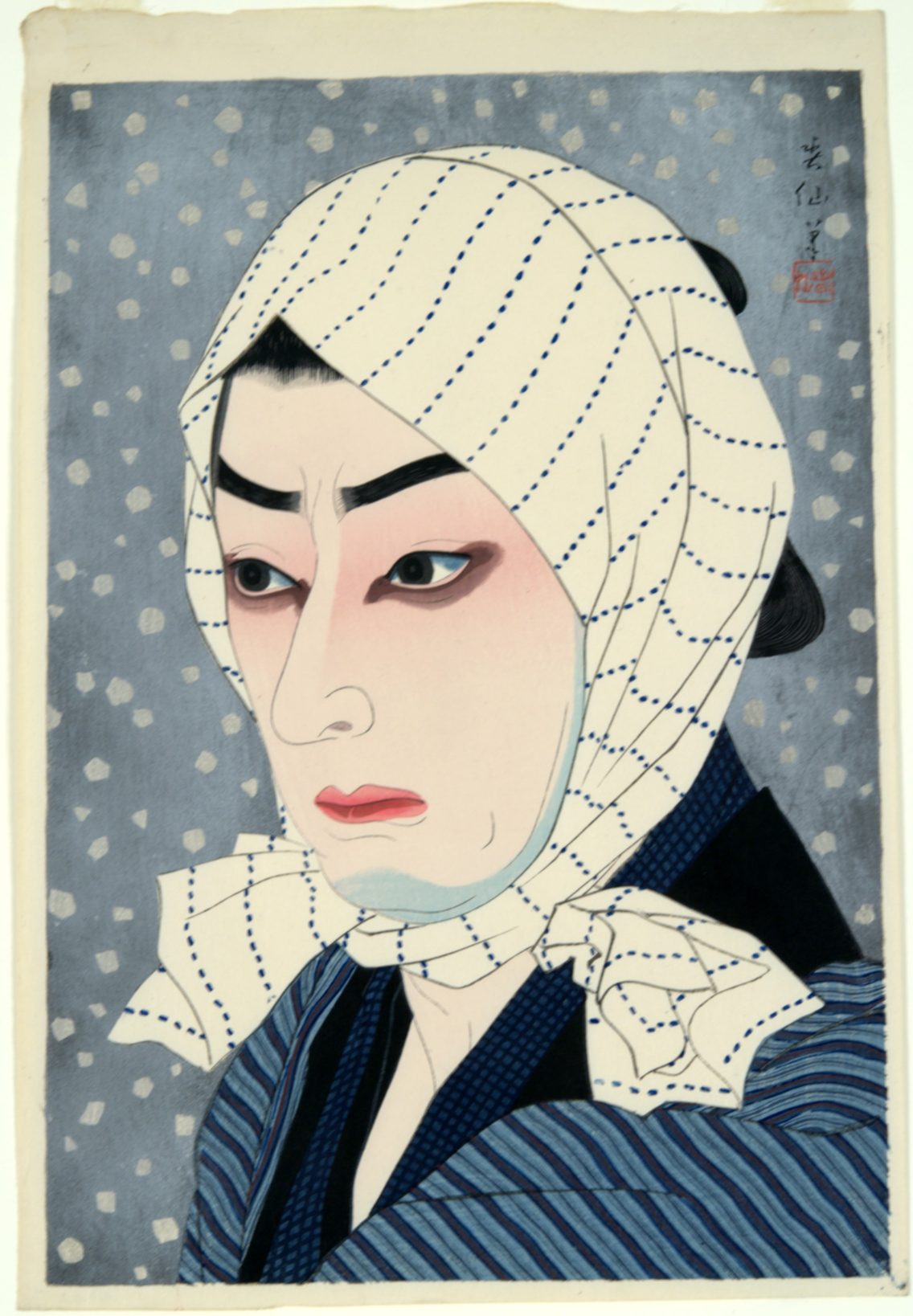
The Hammer Museum at UCLA presents Five Centuries of Works on Paper: The Grunwald Center at 70, a two-part exhibition celebrating the 70th anniversary of the UCLA Grunwald Center for the Graphic Arts. With more than 45,000 prints, drawings, photographs, and artist’s books, the Grunwald Center’s collection of works on paper is among the most significant in the United States. Part One of the exhibition, opening December 20, 2025 and on view through May 17, 2026, features nearly 100 works reflecting the breadth of the collection, from the Renaissance to present day, including works by Albrecht Dürer, Rembrandt van Rijn, Vassily Kandinsky, Käthe Kollwitz, Ansel Adams, Elizabeth Catlett, Corita Kent, Bridget Riley, Ed Ruscha, and Vija Celmins.
“The story of the collection begins with Fred Grunwald, who donated his collection to UCLA in 1956 with the hope that it would become a vital resource for learning and would enrich the university experience,” Zoë Ryan, director of the Hammer Museum, said. “Seventy years later, the Grunwald Center has delivered on that promise through its extraordinary collection, a magnificent gallery for its display, and a study center that serves scholars, students, artists and the general public week in and week out.”
The exhibition begins with an overture of works from the foundational gifts of Fred Grunwald and his family, demonstrating a breadth of collecting areas that have existed from the start. Examples of these Grunwald family gifts include the early modern period by European artists such as Hendrick Goltzius’s engraving, The Standard Bearer, from 1587; nineteenth-century prints from both Europe and Japan, including by James Ensor and Henri de Toulouse-Lautrec and woodblock prints by Utagawa Kunisada and Utagawa Kuniyoshi; examples of German Expressionism including works by Otto Dix and Franz Marc; and twentieth-century prints by renowned artists such as Pablo Picasso.
“The Grunwald Center for the Graphic Arts is a cornerstone of the Hammer Museum—comprising the majority of the museum’s holdings—and a vital resource for UCLA,” Naoko Takahatake, director and chief curator of the Grunwald Center for the Graphic Arts, said. “For seven decades, generations of curators have worked alongside donors, scholars, and artists to shape the center’s collection and programs, expanding upon Fred Grunwald’s founding vision to embrace a diverse range of artistic traditions. Promoting critical thinking, visual literacy, and cross-disciplinary engagement, the center serves as both a repository of cultural history and a forum for contemporary artistic practice.”
Subsequent sections of the exhibition chart the growth of the Grunwald Center’s collections over many decades, highlighting significant acquisitions, past exhibitions, and programs. These sections include Early Modern European prints; 19th-century European prints in dialogue with Japan; American and Mexican prints and photographs from the first half of the 20th century, and drawings made after 1960.
A final section places a spotlight on Los Angeles’s reputation as a vital locus for print publishers who have collaborated with globally acclaimed artists such as Ruth Asawa (printed by Tamarind Lithography Workshop); Ed Ruscha (printed by Cirrus Editions); Francesca Gabbiani (printed by Hamilton Press); Analia Saban (printed by Mixografia); John Baldessari (printed by El Nopal Press); and Ellsworth Kelly (printed by Gemini G.E.L.). Highlighted here are works from Edition Jacob Samuel, The Lapis Press, and Hamilton Press, whose archives were jointly acquired by the Grunwald Center and the Los Angeles County Museum of Art between 2010 and 2017.
The celebration of the Grunwald Center’s 70th anniversary continues well into 2026, when Part Two of the exhibition opens on June 7, running through October 25. The second exhibition will continue to highlight the breadth and depth of the Grunwald Collection, exploring notable collection areas including: Fred Grunwald and family gifts; early modern and 19th-century European prints and drawings; modern European prints and drawings; 20th-century photography; and printmaking post-1960. Artists in Part Two of the exhibition will include Marco Dente, Jusepe de Ribera, Paul Cézanne, Edvard Munch, Edouard Manet, Gustav Klimt, Henri Matisse, Imogen Cunningham, Robert Heinecken, Jasper Johns, Helen Frankenthaler, Kiki Smith, Julie Mehretu, and more.
Five Centuries of Works on Paper: The Grunwald Center at 70 is organized by Naoko Takahatake, director and chief curator, Grunwald Center for the Graphic Arts, and Cynthia Burlingham, former deputy director of curatorial affairs, with Jennie Waldow, curatorial assistant and collection specialist and Kelin Michael, curatorial fellow, Grunwald Center for the Graphic Arts.
ABOUT THE GRUNWALD CENTER FOR THE GRAPHIC ARTS
The Grunwald Graphic Arts Foundation (later the Grunwald Center for the Graphic Arts) was established at UCLA in 1956 with a gift of prints from German émigré Fred Grunwald. Grunwald had begun collecting in Germany in the 1920s with an emphasis on German Expressionism. Much of that original collection had been seized by the Nazis before he fled with this family in 1939.
Once fully resettled in Los Angeles, he resumed collecting—still interested in German Expressionism but broadening his tastes to include prints from 19th and 20th-century Europe, nineteenth-century Japan, and contemporary America.
When, in 1956, Grunwald chose to donate his collection to UCLA, he did so motivated by a desire for the collection to be readily accessible to students, for whom he felt that direct access to great works of art was an indelible component of a university education. Following his death in 1964, his wife and children continued to make gifts of art to the Grunwald Center.
In 1994, the Hammer Museum entered into an operating agreement with UCLA, at which time the staff and collections of the Grunwald Center, among other UCLA-owned collections, came under the stewardship of the Hammer. Over the decades, the Grunwald Collection has grown into one of the premier holdings of works on paper in the country, with works now spanning some 500 years. In 2023, as part of the Hammer’s transformation in collaboration with architect Michael Maltzan, the museum debuted a permanent gallery purpose-built for the display of works on paper, with exhibitions largely drawn from the Grunwald Center.
Adjacent to the gallery is a state-of-the art Study Center, offering access to the Grunwald Collection to all by appointment, and enabling Hammer and Grunwald Center staff to engage with artists, researchers, and the general public as well as to develop unique programs tailored to university curriculum, including courses as diverse as Art History, Medicine, Psychiatry, Comparative Literature and more.
ABOUT THE HAMMER MUSEUM
The Hammer Museum is part of the School of the Arts and Architecture at UCLA, and offers exhibitions and collections that span classic to contemporary art. It holds more than 50,000 works in its collection, including one of the finest collections of works on paper in the nation, the Grunwald Center for the Graphic Arts.
Through a wide-ranging, international exhibition program and the Made in L.A. biennial, the Hammer highlights contemporary art since the 1960s, especially the work of emerging and under – recognized artists. The exhibitions, permanent collections, and nearly 300 public programs annually— including film screenings, lectures, symposia, readings, music performances, and workshops for families—are all free to the public.
HAMMER MUSEUM INFORMATION
Admission to all exhibitions and programs at the Hammer Museum is free. Hours: Tuesday–Thursday & Saturday–Sunday 11 a.m.–6 p.m.; Friday 11 a.m.–8 p.m. Closed Mondays and national holidays.
Hammer Museum, 10899 Wilshire Boulevard at Westwood, Los Angeles. Onsite parking is $8 for the first 3 hours (maximum $22), or $8 flat rate after 5 p.m.
Visit hammer.ucla.edu for details or call 310-443-7000.
Free Admission at the Hammer Museum is courtesy of Marcy Carsey, the Erika J Glazer Family Foundation, and the Anthony Pritzker Family Foundation.

